
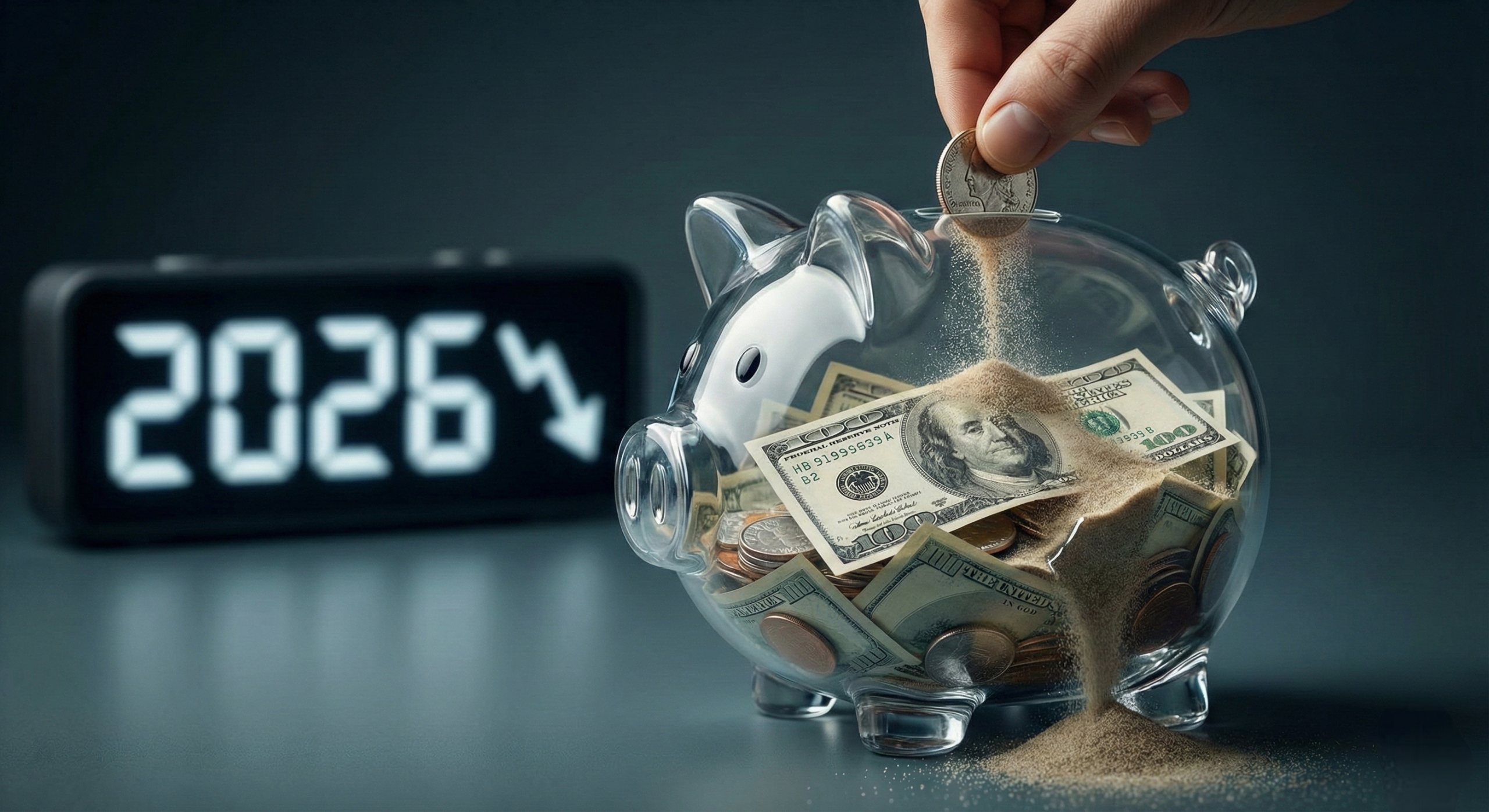
You work hard. You pay your bills. You save whatever is left in your bank account. It feels like the right thing to do. It feels safe.
But there is a problem. That “safe” money is quietly losing value every single day.
In 2026 the rules of money have changed. The old advice to “save cash for a rainy day” is now dangerous advice. It is not protecting your wealth. It is slowly destroying it.
Here is the truth about why holding cash is a trap and what you should know to stop the bleeding.
The Silent Thief: Inflation vs. Interest
We need to look at the math. It is simple but scary.
Banks pay you interest to keep your money. Let’s say you get 3% interest on your savings account this year. You feel good because your balance is growing.
But you are forgetting the silent thief called Inflation.
According to the IMF (International Monetary Fund) global inflation is projected to be around 3.8% in 2026. This means the cost of living is rising faster than your money is growing.
The Real Calculation:
You are not making money. You are mathematically becoming poorer every year you leave that cash sitting there. The number in your account goes up but what you can buy with it goes down.
The “Safety” Illusion
We hoard cash because it feels secure. We can see it. We can touch it.
But history shows this safety is an illusion.
Data from Vanguard covering over 100 years shows a shocking truth. Since 1901 cash has only returned about 0.89% per year after inflation.
Compare that to other assets:
Holding cash is not playing it safe. It is choosing to lose. You are choosing a guaranteed loss of purchasing power over the potential for real growth.
The Coffee Test
Think about it this way. Five years ago a coffee cost you $3. Today that same coffee is $5.
If you saved $3 in a box five years ago it is still $3 today. But now it cannot even buy you a cup of coffee. Your money stayed the same but your world got more expensive. That is the cash trap.
Why 2026 Is Dangerous for
This year is specifically tricky for savers.
In 2024 and 2025 interest rates were high. Banks gave you decent returns. But in 2026 central banks like the Federal Reserve and Bank of England are expected to cut rates.
What does this mean for you?
The “easy money” from high-interest savings accounts is ending. If you rely on a bank account to grow your wealth you are in for a rude awakening.
Assets vs Liabilities
So what do rich people do differently?
They do not hoard cash. They use cash to buy Assets.
Liability: Something that takes money out of your pocket. (Example: A car that loses value the moment you buy it).
Asset: Something that puts money into your pocket or grows in value over time. (Example: Real estate, stocks, or a business).
Rich people keep only enough cash for emergencies. The rest is working for them. They understand that cash is just fuel. You do not store fuel in the garage forever. You put it in the car to go somewhere.
How to Escape the Trap
You do not need to be a millionaire to start fixing this. You just need to change your mindset.
1. Calculate Your Real Return
Check your savings account interest rate. Check the inflation rate in your country. If inflation is higher you are losing money. Be aware of this.
2. The Emergency Fund Limit
Keep 3 to 6 months of expenses in cash for emergencies. Anything more than that is lazy money. It needs to get to work.
3. Look for Real Assets
This is not financial advice but education. Look at things that have historically beaten inflation.
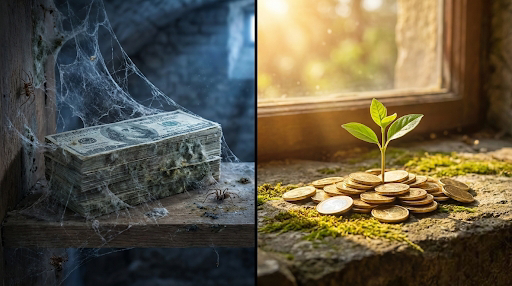
The Final Truth
The bank wants you to keep your money with them. They lend it out to others at 7% or 10% while paying you pennies. They are investing your money and keeping the profit.
Stop being the victim in their business model. Stop saving what is left after spending. Start spending what is left after investing.
That is the only way to beat the cash trap in 2026.